Rare Immunology News
Advertisement
May-Hegglin anomaly (MHA) is a rare, inherited blood disorder characterized by abnormally large platelets (macrothrombocytopenia), low platelet count (thrombocytopenia), and the presence of Dohle body-like inclusions in white blood cells
Prevalence
< 1 / 1 000 000
300–600
US Estimated
500–1,000
Europe Estimated
Age of Onset
Congenital


ICD-10
D69.41
Inheritance
Autosomal dominant
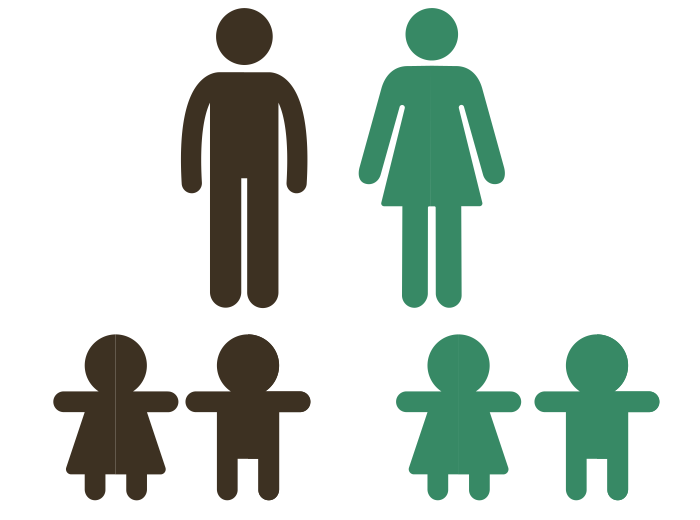
Autosomal recessive

Mitochondrial/Multigenic
X-linked dominant
X-linked recessive
5 Facts you should know
FACT
May-Hegglin anomaly is characterized by thrombocytopenia with large, poorly granulated platelets and Döhle-like inclusions in leukocyte
FACT
It is caused by autosomal dominant mutations in the MYH9 gene, which encodes non-muscle myosin heavy chain IIA
FACT
The degree of thrombocytopenia varies, but bleeding symptoms are typically mild and include easy bruising, epistaxis, and menorrhagia
FACT
MHA is part of a spectrum of MYH9-related disorders, which may also present with nephritis, sensorineural hearing loss, and cataracts
FACT
Management is primarily supportive, and platelet transfusions may be used before surgery or in cases of severe bleeding
Interest over time
Google searches
Common signs & symptoms
Mild to moderate thrombocytopenia
Large platelets
Bruising susceptibility
Epistaxis and mucocutaneous bleeding
Menorrhagia
in females
Nephritis
Proteinuria
Current treatments
Most patients do not require treatment unless bleeding is problematic
during severe bleeding or surgery
Platelet transfusions
before surgery or in bleeding episodes
Desmopressin (DDAVP)
may be used in some bleeding scenarios